
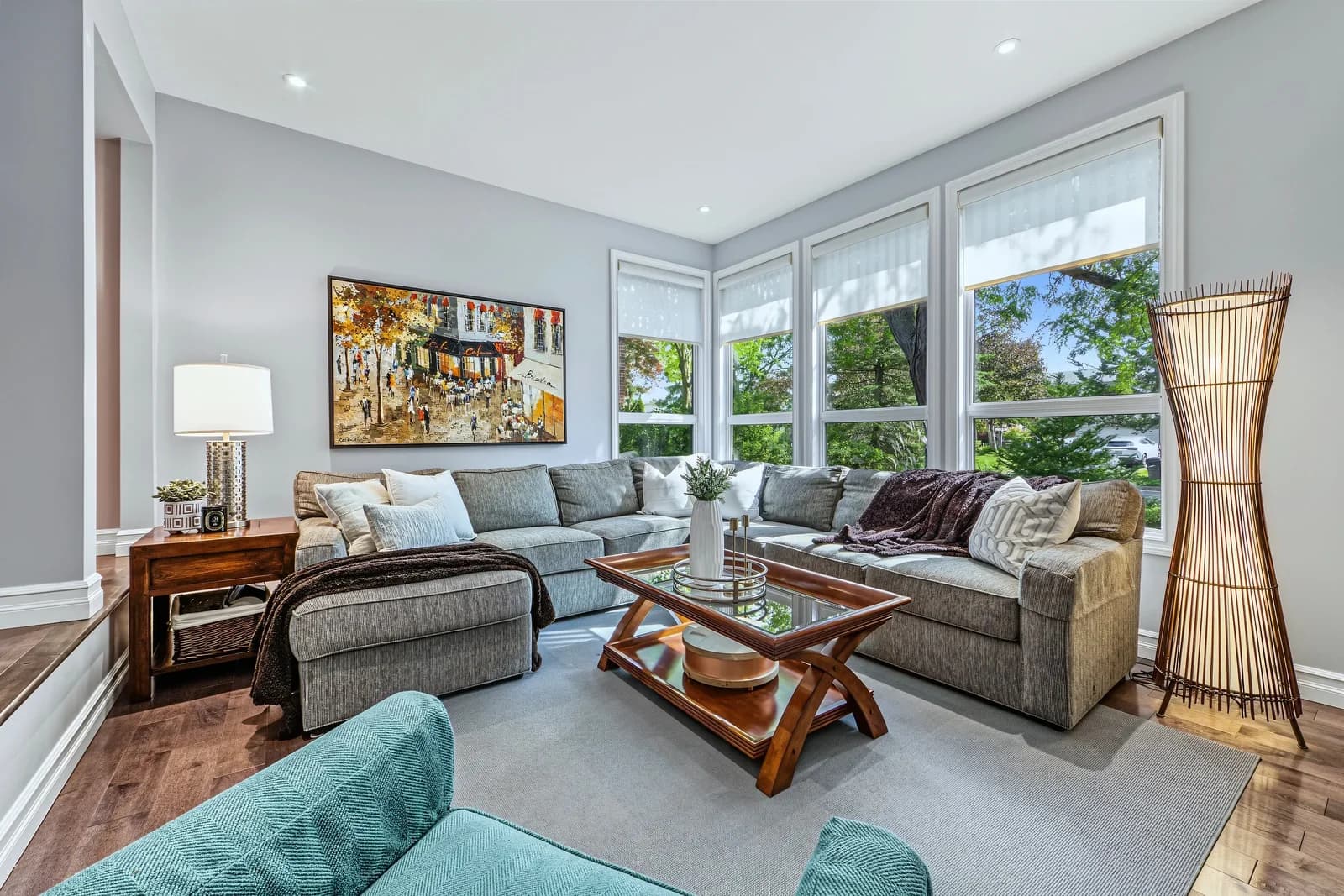
Buyers often decide whether to book a showing from a handful of photographs. The camera matters, but it is only one part of the result. Light, timing, preparation, the way exposures are blended, camera angles, staging, and equipment all shape how a Toronto or GTA listing looks online.
Our team sees the same patterns on almost every shoot. When these pieces work together, rooms feel bright, true to scale, and easy to imagine living in. When one of them is off, even a well-designed home can look smaller or darker than it really is.
Light
Natural light is the starting point of HDR real estate photography. Toronto homes often have bright windows on one side and deeper interior shadows on the other. The goal is to keep the view through the glass readable without letting the room fall into darkness.
Working light bulbs matter as much as the sun. A single burned-out fixture creates a cold patch that reads as neglect, not atmosphere. Turn on the lights you want in the frame, and open or close blinds according to the view and the glare.
Timing
The best time depends on the property, not a generic golden hour. East-facing façades often photograph more evenly in the morning; west-facing ones later in the day. Overcast skies can be kinder to interiors than harsh midday sun, because the contrast between windows and rooms is gentler.
Season plays a role in the GTA as well. In winter, daylight fades early, so exterior planning needs more care. In summer, gardens are an asset — as long as the lawn is tidy and the sun is not blowing out every south-facing window.
Preparation
No lens corrects a crowded counter or a car parked in front of the garage. Decluttering, making the beds, clearing the driveway, and putting away personal items are part of photo quality, not a separate chore. The same printable home preparation checklist (PDF) we share with sellers is a practical starting point.
HDR
HDR, or high dynamic range, means capturing several exposures of the same view and blending them so bright windows and interior shadows both hold detail. Done well, the result looks natural: you can see the room and the backyard, without a harsh halo around the window or colours that feel over-processed. This is especially useful in the GTA, where many listings are photographed in mixed light — a sunlit kitchen opening onto a deeper living room, or a condominium with a bright balcony and a softer interior.
Angles and composition
We usually work with a wide-angle lens on a tripod, from a height and a corner that show how a room flows, without stretching furniture into odd shapes. Vertical lines — door frames, cabinets, and walls — should stand straight. One thoughtful angle per room is more useful to a buyer than several near-duplicate frames, and the connection between kitchen and living space often matters as much as a single hero shot.
Staging
Furniture placement changes how large a room feels. Pull pieces slightly away from the walls, hide cables, and leave enough floor visible for the space to breathe. If a home is vacant, empty rooms can look smaller than they are. Virtual staging can help buyers understand scale, and it should always be shown alongside the original photograph of the empty room.
Equipment and editing
Professional cameras, wide-angle lenses, a stable tripod, and colour-managed editing are what make the previous steps hold together. We correct white balance so warm interior lighting and daylight feel consistent, straighten geometry, and keep finishes looking like they do in person.
You can see this approach in our selected work. If you are planning a listing in Toronto or the GTA, get in touch and our team will help you choose the right coverage for the property.